

NIPTE university faculty members collaborate with government and industry to address challenges in drug development and manufacturing.
By Jennifer Markarian
The National Institute for Pharmaceutical Technology & Education (NIPTE) is a multi-university organization with a 20-year history of research and education that has been critical to modernizing U.S. pharmaceutical development and manufacturing. At the core of NIPTE is a group of visionary pharmaceutical scientists and educators dedicated to their mission: “to improve the way medicines are designed, developed and manufactured to meet the needs of patients in the 21st century.”
“NIPTE is a unique organization,” said Dr. Kenneth Morris, one of NIPTE’s founders, past professor and Director of the Lachman Institute for Pharmaceutical Analysis at Long Island University, and current advisor to FDA. “It is uncommon to have this many university departments working together toward the same goals without focusing on who gets the credit. With this group, it’s really about the mission—to make sure the challenges of drug quality and supply get resolved, so that patients get the medicines they need.”
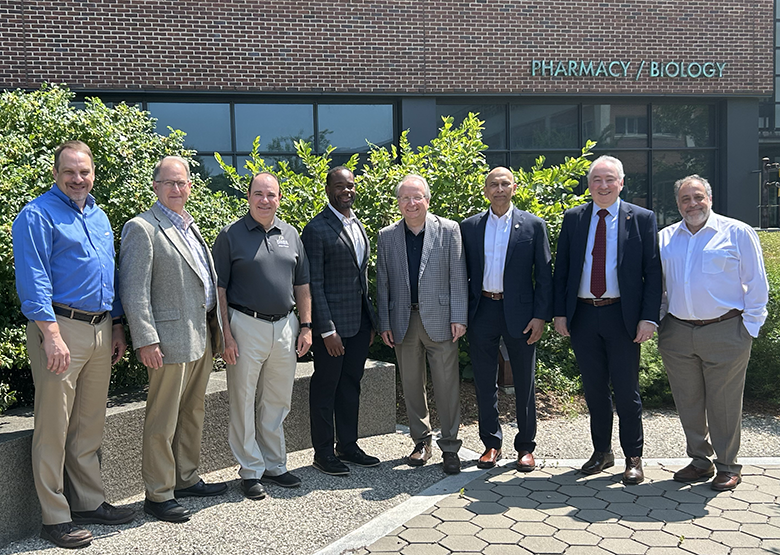
“The fact that NIPTE has persisted and grown in both size and scope is a testament to the value the organization provides to the scientific research of their clients, the collegiate scientists involved, and the colleges,” said Dr. Marilyn Speedie, Dean Emerita, University of Minnesota College of Pharmacy, and one of NIPTE’s founders.
NIPTE’s leaders are not just looking back at past successes, however, but are pressing ahead to bring solutions to the latest scientific and technical challenges that face the drug development and manufacturing ecosystem. The institute’s research and education initiatives aim to continue to help modernize pharmaceutical manufacturing and build a skilled U.S. workforce, from operators to Ph.D.s.
"NIPTE is not just a non-profit research consortium—it’s a national catalyst accelerating the transformation of pharmaceutical manufacturing, policy, and education. Its work is essential to securing a resilient, equitable, and innovation-driven future for America’s medicine supply," said Dr. Indra Reddy, interim chief operating officer and vice president of Texas A&M Health, Founding Dean Emeritus, Irma Lerma Rangel School of Pharmacy, and recent past chair of the NIPTE Board of Directors.
Passion and dedication characterize NIPTE’s leaders, combined with scientific knowledge and insight built over the years. The energy that emanates from them in conversations about their areas of expertise creates a sense of optimism that, indeed, problems of drug shortages and quality can be solved with science and innovation—we just need to join them in their mission. A look back at NIPTE’s past successes shines a light on the path forward.
Founded to Fill a Public Knowledge Gap  Twenty years ago, when leaders from 10 U.S. research universities founded NIPTE, there was a growing need for non-proprietary knowledge in pharmaceutics—based on public research rather than private, industrial contracts—to help solve broad challenges in formulation and drug manufacturing. NIPTE leaders worked closely with FDA, which had just launched the Pharmaceutical Current Good Manufacturing Practices (cGMPs) for the 21st Century Initiative to modernize pharmaceutical manufacturing and regulatory oversight and the Critical Path Initiative to create better tools for translating scientific discoveries into medical treatments. NIPTE’s vision was that their non-profit community would come together in an unprecedented way to understand what scientific questions needed to be answered to help improve the quality of pharmaceutical products as well as to improve affordability and availability for patients, and to gain and distribute funding for research to answer these questions.
An early example of this collaborative research was an FDA-funded, multi-year project in which researchers from nine NIPTE universities used an approved solid-dosage drug tablet (gabapentin) as a model tablet formulation to demonstrate how a Quality by Design manufacturing design space could be linked to shelf-life stability. The research—at Duquesne, Purdue, Rutgers, Illinois Institute of Technology, and the Universities of Maryland, Kentucky, Minnesota, Connecticut and Iowa—produced new knowledge about design space and risk assessment.
“An important finding was that exposure to mechanical stress during processing caused an increased rate of chemical decomposition of gabapentin. This discovery led to improved formulations and became a classic case study for my pharmaceutics’ students,” said Dr. Dale Wurster, Professor Emeritus of Pharmaceutics at the University of Iowa College of Pharmacy, past chair of the NIPTE Faculty Committee and current chair of that committee’s Past Chairs Advisory Council.
Experiential Education
Another pressing need at the time of NIPTE’s founding was to grow the number of experts in the disciplines of Pharmaceutics and Pharmaceutical Engineering. NIPTE created a forum to support faculty, junior faculty, and graduate students who could perform critical research and then use and share the expertise they had gained.
“We are proud to see our graduate students thrive in industry, academia, and at regulatory agencies like the FDA. Their success speaks to the excellence of our curriculum and the power of partnerships like those fostered through NIPTE,” said Dr. Philip Hritcko, current Vice-Chair of the NIPTE Board of Directors and Dean and Clinical Professor at the University of Connecticut School of Pharmacy. “As a collaborative research institute, NIPTE plays a critical role in advancing pharmaceutical science and education nationwide, helping to ensure that the next generation of researchers and pharmacy professionals is equipped to lead innovation and improve public health.”
“NIPTE is a model of how education, research, and practice can intersect to create national impact. It provides students and trainees with experiential learning linked to real-world pharmaceutical challenges, while also producing rigorous research that guides industry and regulatory practice. NIPTE ensures that academic innovation translates directly into operational improvements and national resilience in the pharmaceutical ecosystem,” added Reddy.
Indeed, researchers associated with NIPTE universities have become renowned experts in various fields, and the association has run training programs for FDA scientists as well as industry scientists. Most recently, NIPTE is creating a new, industry-oriented continuing education training program.
“The NIPTE Industrial Consortium for Workforce Development program will be customized to meet specific needs that companies may request. NIPTE is ready and able to meet this challenge, as our diverse member universities each bring unique research and workforce development skills, with some focused on pharmacology, for example, and some with engineering research,” said Dr. Vadim J. Gurvich, executive director of NIPTE and research associate professor of medicinal chemistry at the University of Minnesota College of Pharmacy.
Bridging Research and Real-World Practice: Addressing Drug Shortages
NIPTE has been successful over the past two decades at bringing together academia and public and private sectors to perform highly impactful research. Now, the group is focused on the crucial problem of drug shortages. While the causes of drug shortages are multi-faceted and complex, one target is reducing supply chain risk by increasing domestic pharmaceutical manufacturing.
“NIPTE stands out because of its collaborative, multi-institutional framework that unites academia, national labs, industry, and regulatory agencies. It serves as a national engine for pharmaceutical innovation by advancing science-based manufacturing, data-driven regulatory alignment, and education. NIPTE’s ability to bridge research and real-world practice enables it to deliver scalable, policy-relevant solutions that improve medicine quality, safety, and accessibility. It has also played a vital role in shaping national conversations around reshoring essential medicine production,” said Reddy.
“NIPTE does not have any vested political interest—we stand in the gap to bring awareness to the problems that cause drug shortages and affect patients,” added Morris.
Advanced manufacturing methods and tools, such as continuous manufacturing, are seen as key to re-shoring the pharmaceutical supply chain. NIPTE members Rutgers, Purdue, and the University of Puerto Rico were at the forefront of developing these technologies through a research center started in 2006. In 2023, recognition of the benefits and importance of advanced manufacturing technologies for increasing domestic pharmaceutical manufacturing led Congress to authorize a National Centers of Excellence in Advanced and Continuous Pharmaceutical Manufacturing program, which currently remains unfunded. NIPTE and its member universities are now advocating for Congress to designate funds to move these projects forward in 2026.
“These centers will serve as hubs of innovation, driving advancements in continuous manufacturing that are essential for economic growth, technological leadership, and supply chain resilience. Through strong partnerships among government, industry, and academia, including those championed by NIPTE, we can ensure that these Centers of Excellence become catalysts for transformative impact across the entire pharmaceutical ecosystem,” said Hritcko.
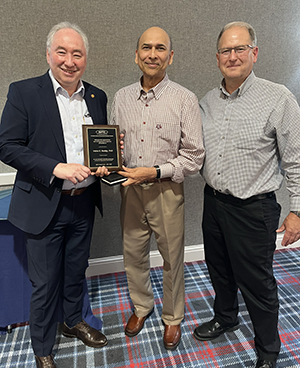 Bringing AI to Pharma
The push to reshore manufacturing of drug products encompasses domestic production of active pharmaceutical ingredients (APIs) and the raw materials used to make them. More than 70% of APIs are made outside of the U.S., and the role of China in key supply chains is considered a security risk. Artificial intelligence (AI) is increasingly seen as critical for modern drug development and manufacturing, and countries are also vying for developing domestic AI know-how.
A NIPTE-wide initiative, co-led by Purdue University and Texas A&M University Health, aims to develop AI-enabled pharmaceutical manufacturing processes. The team is seeking funding to establish a new public-private institute in the Manufacturing USA network: the Resilience with AI for Materials and Medicine Production & Scale Up (RAMP Up!) Institute.
“This initiative directly supports federal priorities for reshoring essential medicine production and enhancing domestic biomanufacturing capacity. It is backed by over 100 national partners, including Eli Lilly, NVIDIA, and multiple regional tech hubs and has bipartisan Congressional support,” said Reddy. The project is poised to transform pharmaceutical manufacturing.
NIPTE is involved in other initiatives supporting U.S. manufacturing of critical medicines, as well. NIPTE, Purdue, and the Information Technology and Innovation Foundation co-hosted an event in May in Washington D.C. where event participants signed an accord committing to enabling critical medicine manufacturing in the U.S. through development of AI-enabled manufacturing and programs for workforce training in advanced pharmaceutical manufacturing, among other shared objectives.
“We are excited to work with partners at Purdue and in other academic settings to really invent new IP, to create new types of medicines and make the current medicine types we have even more efficient and scalable here in the U.S.,” said Eli Lilly CEO, David Ricks, at the event.
“Reshoring pharmaceutical manufacturing in the U.S. would require a new workforce that is highly trained in modern manufacturing technologies,” said Gurvich. “Some technologies, involving AI, for example, are yet to be developed. NIPTE institutions are the best positioned to lead academia in developing training programs, on all levels, to match these emerging needs.”
Raising Generic Drug Quality
The conversation about reshoring also includes generic drug manufacturing. While generic drugs are important for reducing cost and improving accessibility for patients, production has typically taken place outside of the U.S. where costs are lower. The drive to reduce drug shortages, however, includes reshoring generic drug production in a cost-effective way and improving its quality.
NIPTE is seeking to create a public-private partnership to support U.S. generic drug manufacturing, with NIPTE’s university labs as a distributed research network. These labs would recreate manufacturing process knowledge, or what NIPTE is calling “New Prior Knowledge,” to support improved quality, which would help reduce recalls and shortages and improve accessibility to generic drug products. New research into some of these old products, such as levothyroxine, could help solve persistent quality problems that erode trust in generics. NIPTE would also create process knowledge to support sponsors of new generic drugs and help speed approval.
“Less than half of the drugs that are available to have generic versions actually do, partly due to the cost of entry and to the prior scientific knowledge that is needed but not typically available to generic drug manufacturers,” said Morris. He said NIPTE holds the keys. “NIPTE’s universities collectively hold the largest academic industrial pharmacy knowledge base in the world, and many of NIPTE’s laboratories are designed to generate data needed to manufacture drugs. If you aimed to set up a non-profit organization that had the experience and resources to develop this body of knowledge, you’d end up with NIPTE.”
Educating Future Pharmacists
Nearly all of NIPTE’s members are also AACP members, and they point out that pharmacy students can benefit from participating in the type of research that NIPTE graduate-level programs offer, in addition to their coursework in Pharmaceutics.
“Pharmacists may perform drug compounding in their practice, which is, in essence, manufacturing, and is governed by rules for quality and safety,” explained Morris. He noted that students who worked in his lab and went on to practice pharmacy took with them a deeper understanding of drug manufacturing and quality concepts. “This understanding is the difference between compliance—where I check the box that I followed the procedure—and adherence—where I followed a procedure with an understanding of the reasoning for the procedure and the spirit of the guidance.”
“The work being done by NIPTE members directly enhances the education and training of practicing pharmacists by deepening their understanding of how medications are developed, manufactured, and regulated and ultimately leading to safer, more effective patient care,” added Hritcko.
Getting Involved in NIPTE
Schools of pharmacy, engineering and medicine are welcome to join NIPTE. Faculty members from any Member University can participate in the Faculty Committee and in Centers of Excellence and Focus Groups to address specific topics.
“AACP members have much to gain—and offer—by engaging with NIPTE. The Institute offers a powerful platform to participate in collaborative research, shape national health policy, and contribute to workforce development. By supporting NIPTE’s mission, faculty can amplify their impact beyond the classroom and contribute meaningfully to advancing quality, safety, innovation, and self-reliance in the U.S. medicine supply chain,” concluded Reddy.
Jennifer Markarian is a freelance writer based in New Jersey.
Meet the MembersNIPTE’s coalition, which is headquartered in Minneapolis, includes 16 universities, with a representative of each serving on the board of directors. Full member universities are:
To find out more, visit nipte.org. |