
Pharmacy Education 2026 - Speakers
Opening General Session
Neurodivergence at the Crossroads: A Systems-Oriented Framework for Supporting Emerging Adults in Higher Education
Institutions of higher education are experiencing a marked rise in neurodivergent adolescents matriculating to campus, including students with autism, ADHD, learning disabilities, executive functioning differences, and complex co-occurring profiles. Yet prevalence alone does not explain what practitioners are observing. The transition from adolescence to emerging adulthood represents a profound systems shift, not simply a developmental milestone.
This session reframes the conversation through a systems-oriented lens. As students enter college, they do not merely change academic settings. They simultaneously navigate shifts across educational structures, family dynamics, environmental expectations, and legal frameworks. The result can be the onset of new symptoms, shifts in presentation, delayed mental health emergence, or the amplification of previously compensated challenges.
Drawing on research in family systems theory, neurodevelopment, and transition science, this session explores how layered, interacting systems influence self-regulation, help-seeking behavior, disclosure decisions, medication management, and social integration. Particular attention will be paid to the developmental tension between dependence and self-agency as students move from supported adolescents to emerging adult decision-makers. Attendees will gain a deeper understanding of how to align campus systems, family engagement practices, and student development theory to foster resilience, competence, and belonging during one of the most pivotal developmental windows of the lifespan.
This is not simply a conversation about disability services. It is an invitation to reimagine how higher education systems can evolve to meet the complexity of today’s neurodivergent emerging adults.

Alexander Morris-Wood, Ed.D.
Head of School
Franklin Academy
Dr. Alexander Morris-Wood is a nationally recognized leader in neuroinclusive education and currently serves as Head of School at Franklin Academy in Connecticut. He has dedicated his career to advancing systemic models that integrate academic rigor, executive functioning development, and college readiness for neurodivergent learners.
Previously, he served as Vice President of Program Development and Dean of Admissions at Beacon College, where he founded the Center for College Readiness and developed the Triadic Model, a cross-divisional framework aligning admissions, academics, and student support to improve retention and student success.
Dr. Morris-Wood’s research examines family systems theory and the emotional impact on parents when their autistic child transitions to higher education. He now consults with colleges and universities nationwide on implementing institution-wide neuroinclusive practices and launched the Center for Neurodiversity, a regional initiative expanding access and professional capacity to support neurodivergent individuals and their families.
Science Plenary
Reimagining Therapeutic Innovation
This session will explore how emerging technologies are transforming the drug discovery and development pipeline and reshaping the future of therapeutic innovation. Faculty panelists will discuss advances including AI-driven drug discovery, new approach methodologies (NAMs) for non-clinical testing, engineered tissue systems and organoids, novel drug delivery platforms, and systems pharmacology. These innovations are expanding treatment possibilities, reducing reliance on animal studies, and enabling earlier identification of safety risks. Through an interactive discussion, speakers will examine both the promise and the challenges of adopting these approaches, including regulatory uncertainty, validation, infrastructure needs, and workforce readiness. The session will emphasize the importance of preparing for ongoing changes in the development pipeline and envisioning how these technologies will influence future patient care.
A key focus will be on training the next generation of pharmaceutical scientists and pharmacists. Panelists will highlight strategies to evolve professional and graduate education toward interdisciplinary, data-driven, and entrepreneurial models, while leveraging the unique strengths of pharmacy schools in translational and clinically grounded research.
Finally, the discussion will address the current funding landscape and identify strategies to sustain innovation, including diversifying research support and building cross-sector partnerships.
Attendees will gain practical insights into navigating technological change and advancing research, education, and practice in a rapidly evolving therapeutic development ecosystem.
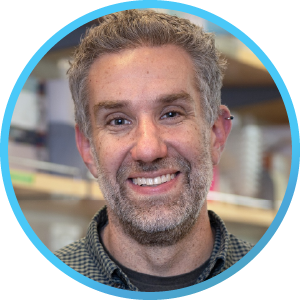
James Fraser, Ph.D.
Chair of the Department of Bioengineering and Therapeutic Sciences
University of California, San Francisco
James Fraser studied Biology as an undergraduate at McGill University. His Ph.D. work at UC Berkeley under Dr. Tom Alber focused on the relationship between protein conformational dynamics and enzymatic catalysis. He moved to UCSF to start his lab in 2011. Currently, Professor Fraser is Chair of the Department of Bioengineering and Therapeutic Sciences. His lab’s work spans across various disciplines, including structural biology, deep mutational scanning, and drug discovery. He is also known for his commitment to open science, serving on the board of ASAPbio for many years. He recently started OpenADMET, an organization with the mission to build open predictive models of drug safety and toxicity to more reliably, cheaply, and effectively treat disease.

Sam Lai, Ph.D.
Professor of Pharmacoengineering & Molecular Pharmaceutics; Professor of Microbiology & Immunology
UNC Eshelman School of Pharmacy
Dr. Lai is a Professor in Pharmacoengineering & Molecular Pharmaceutics at the Eshelman School of Pharmacy in University of North Carolina at Chapel Hill. He directs a dynamic and highly multidisciplinary research program at the interface of immunology, bioengineering and drug delivery. His previous work has spawn multiple new areas of research, launched multiple publicly-traded companies, and his inventions have culminated in multiple FDA-approved products as well as active clinical trials.
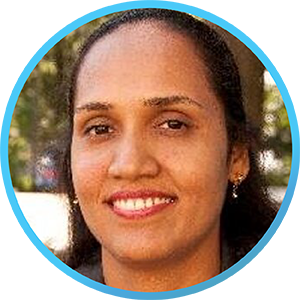
Shilpa Sant, Ph.D.
Professor of Pharmaceutical Sciences
University of Illinois Chicago Retzky College of Pharmacy
Dr. Sant is a full Professor of Pharmaceutical Sciences at the Retzky College of Pharmacy at the University of Illinois Chicago with a membership in Translational Oncology program at the University of Illinois Cancer Center. She is a faculty member at the McGowan Institute for Regenerative Medicine at the University of Pittsburgh. Dr. Sant is a pharmaceutical scientist by training (BPharm Pharmaceutical Science, MPharm Pharmacology and Ph.D. Pharmaceutical Technology) with a strong background in biomaterials, bioengineering, micro/nanoscale technologies, and cancer biology. Dr. Sant has contributed over 75 research/review articles including edited book on nanomaterials, edited journal issue and 5 awarded US patents. Her research is funded by NIH. She is an elected Fellow of The American Institute of Medical and Biological Engineering (AIMBE).
AACP President
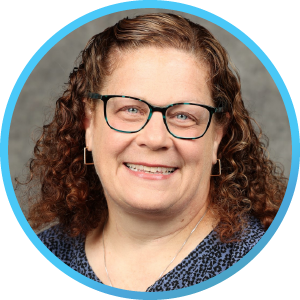
Robin M. Zavod, Ph.D., FAPhA
Dr. Robin M. Zavod is a Professor of Pharmaceutical Sciences at Midwestern University’s College of Pharmacy in Downers Grove, IL. With a strong foundation in medicinal chemistry, Dr. Zavod has dedicated just over three decades to the advancement of pharmacy education and scholarly publishing.
Dr. Zavod’s academic journey began with a Ph.D. in Medicinal Chemistry from the University of Kansas, followed by a postdoctoral fellowship at Indiana University. Since joining Midwestern University in 1994, Dr. Zavod has developed and taught a wide range of courses, including the medicinal chemistry of agents to treat diseases within the cardiovascular and endocrine systems. Known for fostering an inclusive and supportive learning environment, Dr. Zavod has also designed elective courses on Mental Health First Aid, Self Management in the Face of Different (focus on visible and invisible disabilities), Healing Therapies, and Cannabis for Healthcare Professionals.
An influential leader in academic scholarship, Dr. Zavod has presented at national conferences, including multiple sessions at the AACP Annual Meetings and Rx Writing Challenge webinars. These presentations focus on educational scholarship and academic writing in pharmacy education. Dr. Zavod's professional contributions extend to peer review, as well as being the founding editor-in-chief of Currents in Pharmacy Teaching and Learning and an Associate Editor of the Journal of Pharmacy Teaching and AAPS Open. Additionally, Dr. Zavod has been an active member of the American Foundation for Pharmaceutical Education’s Board of Grants, where they review and contribute to funding decisions supporting the next generation of pharmacy researchers. Dr. Zavod has co-authored several books with colleague Dr. Marc Harold and has contributed several book chapters for many editions of Foye’s Principles of Medicinal Chemistry. Her research interests include student self-efficacy, as well as learning and retention strategies.
Dr. Zavod has received several awards for teaching excellence and the Outstanding Faculty of the Year Award. Dr. Zavod is also a Fellow of the American Pharmacists Association (APhA-APRS) and has provided leadership on multiple levels at several professional organizations including AACP, APhA, AAPS, and ACS.
As an advocate for mental health awareness and inclusive education, Dr. Zavod is certified in Mental Health First Aid and Safe Zone workshops. She has been a passionate mentor for students, guiding them through academic rotations and supporting their development in both clinical practice and scholarly pursuits.
Dr. Zavod's commitment to the advancement of pharmacy education, leadership, and advocacy for diversity and inclusion has made a profound impact on students, faculty, and the broader pharmacy community.
AACP President-Elect
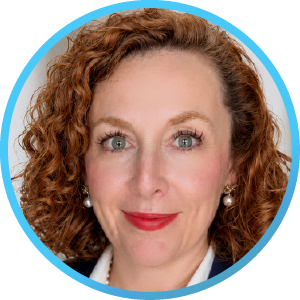
Margarita DiVall, Pharm.D., M.Ed., BCPS, FNAP
Dr. Margarita DiVall is a Clinical Professor at the School of Pharmacy and Pharmaceutical Sciences, and Senior Associate Dean for Faculty Affairs and Belonging at the Bouvé College of Health Sciences, at Northeastern University in Boston, Massachusetts. Dr. DiVall earned her Pharm.D. and M.Ed. degrees from Northeastern University and completed a PGY1 pharmacy practice residency at Beth Israel Deaconess Medical Center, where she subsequently practiced as a Clinical Specialist in Adult Internal Medicine while serving on faculty at Northeastern University.
Dr. DiVall's scholarly expertise spans curricular design and assessment, interprofessional education, faculty affairs, and community and belonging. She is widely recognized as a leader in exam quality and assessment methodology, with expertise in question writing, test blueprinting, and psychometric analysis, and has delivered workshops on these topics at pharmacy schools across the country. Her faculty affairs work encompasses mentorship, peer evaluation of teaching, and fostering a culture of belonging—areas in which she has engaged nationally and contributed to the broader conversation on faculty development in academic pharmacy. She has delivered workshops at pharmacy schools across the country, authored numerous peer-reviewed publications, presentations, and book chapters across these areas of expertise.
Dr. DiVall’s service to AACP has been extensive and sustained. A graduate of the 7th cohort of the Academic Leadership Fellows Program, Dr. DiVall has served in numerous elected and appointed leadership roles, including Chair of the Council of Faculties, Chair of the Strategic Planning Committee, and member of the Board of Directors and Executive Committee. She has been an active member of the Assessment SIG and the Council of Faculties for many years. She is the recipient of multiple AACP honors, including the Award for Excellence in Assessment (2011, 2016), Lyman Award (2025), and the Assessment SIG Collaborative Assessment Scholarship Award (2020, 2021, 2023, 2024).
Dr. DiVall is a Board-Certified Pharmacotherapy Specialist and a Distinguished Practitioner Fellow of the National Academies of Practice. She is a member of Rho Chi and Phi Lambda Sigma, and serves as a faculty advisor to the Northeastern University Phi Delta Chi chapter.
Driven by a deep passion for advancing pharmacy practice and education, she is committed to shaping the future of the profession through the development of the next generation of pharmacists, pharmacy educators, and leaders.