

Multimedia Library | Advocacy | Culture | Practice
Jump to:
- Expanding Certified Pharmacy Technician Administered Vaccines in New Hampshire
- Bridging Policy and Practice: Engaging Legislators on PBM Reform with Real-World Pharmacy Data [Category Winner]
- Redefining Pharmacy: Local Impact Beyond the Medication
- Advocacy in Action: Advocating for the Future of Community Pharmacy
- United Voices: Engaging Student Pharmacists in Statewide Legislative Advocacy
Advocacy – Engaging Policymakers and Amplifying Pharmacy Education's Voice
Projects in the Advocacy category focused on engaging policymakers and amplifying pharmacy's voice. Teams worked to bring community pharmacy's perspective to the people and decisions that shape it, with the goal of driving measurable change for pharmacists and the patients they serve.
Expanding Certified Pharmacy Technician Administered Vaccines in New Hampshire
Massachusetts College of Pharmacy and Health Sciences Worcester/Manchester | Faculty Lead: Laura R. Daly
Narrative Description
Problem Statement:
Access to timely and comprehensive immunization services remains a critical public health need in New Hampshire (NH), particularly in rural and underserved areas. Currently, certified pharmacy technicians in NH are authorized to administer only influenza and COVID-19 vaccines, while pharmacists, pharmacy interns, and licensed advanced pharmacy technicians (LAPTs) may administer all Advisory Committee on Immunization Practices (ACIP)-recommended vaccines to adults. This restrictive scope creates workflow inefficiencies, reduces vaccine coadministration opportunities, and limits pharmacists’ availability to provide enhanced patient care services. In contrast, all other New England states allow pharmacy technicians to administer all ACIP-recommended vaccines under the direct supervision of an immunizing pharmacist. Expanding technician scope in NH would empower technicians to practice at the top of their training, improve vaccine coadministration rates, enhance pharmacy workflow, and support broader public health goals.
Description of New Collaboration:
MCPHS University students and faculty partnered with Walgreens corporate leadership and community pharmacists to advocate for expansion of certified pharmacy technician vaccine administration authority in NH. This collaboration united academia, trainees, and practicing pharmacists with corporate and advocacy expertise to present a case for legislative change.
Students and faculty led the evaluation of scientific literature and state regulations. Walgreens pharmacists contributed practical workflow and patient care insights by providing testimonials. Walgreens corporate leadership supported the project’s development by providing initial conceptual input and facilitating strategic connections with the organization’s legislative advocacy resources. Students played an integral role in research, presentation development, and stakeholder engagement, gaining hands-on experience in policy advocacy.
Project Implementation:
The project was implemented through an evidence-based advocacy approach designed to support legislative change in New Hampshire.
First, the team conducted a comprehensive review of scientific literature examining the safety and efficacy of pharmacy technician administered vaccines, alongside an analysis of existing vaccination authority across New England states. The team also reviewed data from the vaccine error reporting program published by the Institute for Safe Medication Practices (ISMP). This research established a strong comparative and clinical foundation, demonstrating that New Hampshire’s current restrictions are out of alignment with regional norms and national evidence-based practice.
Second, the team developed a legislative strategy that explored two pathways for change: pursuing a direct statutory amendment to support the addition of “certified pharmacy technicians” to RSA 318:16b or advocating for standard of care legislation, which would allow pharmacists to delegate vaccine administration to pharmacy technicians based on their education, training, and experience.
The final phase of implementation emphasized stakeholder engagement and legislative advocacy. The team presented project findings and recommendations to state pharmacy organizations and the Walgreens Government Affairs team. Team members also participated in a NH Senate committee public hearing to advocate for legislative change. Engaging multiple stakeholders in this coordinated effort amplified the project’s reach, enhanced its credibility, and demonstrated shared academic, professional, and operational support for expanding pharmacy technician administered vaccines.
Outcomes & Impact:
Although the initiative is ongoing, the project has already yielded meaningful qualitative outcomes that demonstrate progress toward legislative change and sustained impact on trainees, partners, and the pharmacy profession in New Hampshire. The primary outcome, an increased awareness and momentum around the need to modernize pharmacy practice laws, was achieved. Research findings were shared using two modalities: an academic poster and a formal oral presentation supported by presentation slides. The academic poster summarized key safety data, outlined two potential legislative pathways for change, and analyzed the advantages and limitations of each approach. The oral presentation expanded upon the poster content by providing an overview of vaccine administration requirements in New Hampshire and surrounding New England states, supplementary safety data from published studies, and a discussion of pharmacist burnout and workforce strain. The presentation also highlighted the positive impact of certified pharmacy technician administered vaccines on workflow efficiency, incorporating pharmacist testimonials to illustrate real world practice implications.
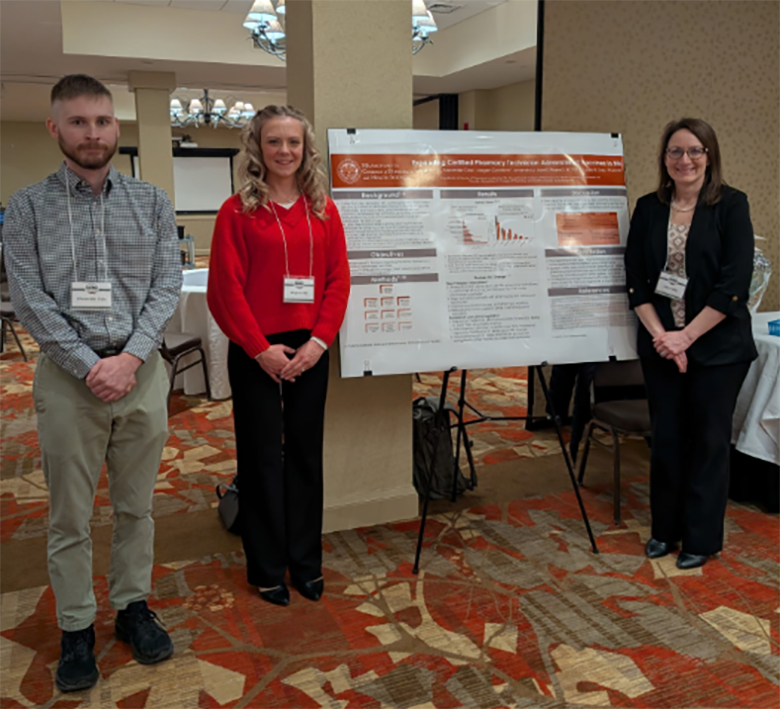
Team members disseminated project findings through three presentations. The academic poster was presented during the exhibit sessions at the New Hampshire Society of Health-System Pharmacists (NHSHP) Cabin Fever Continuing Education Weekend on March 13-14, 2026 (Figure 1). On March 18, 2026, the team delivered a formal oral presentation to the New Hampshire Pharmacists Association (NHPA) Board of Directors. On April 3, 2026, the team delivered a formal oral presentation to the Walgreens Government Affairs team.
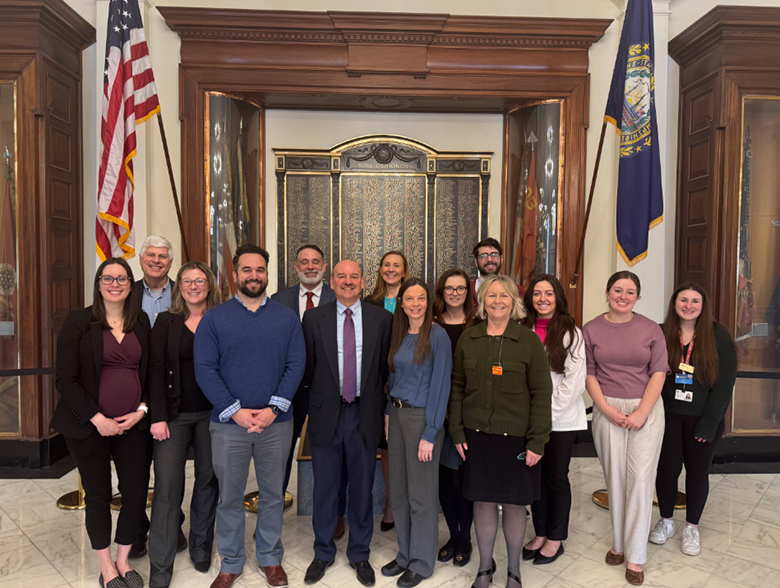
At the policy level, members of the team, alongside other pharmacy leaders across the state, participated in advocacy at the New Hampshire State House in Concord to support updating the statutory definition of the practice of pharmacy (Figure 2). This effort represented the critical first step toward standard of care legislation through Senate Bill 504. As part of this advocacy, Dr. Amanda Morrill provided verbal testimony in support of SB 504 during the Senate Health and Human Services Committee Public Hearing on March 11, 2026 (video link under Supporting Document & Media Link). These efforts helped position pharmacy technician vaccination authority within a broader conversation about practice modernization and patient access to care.
This project provided substantial benefits to trainees involved. Students gained hands-on experience in policy research, legislative strategy, professional advocacy, and public speaking, fostering leadership development and deeper engagement with the pharmacy profession beyond traditional clinical training. Faculty and professional partners benefited from strengthened academic-practice collaboration, while the broader pharmacy community benefited from shared evidence and a coordinated advocacy approach. Collectively, these outcomes demonstrate early but meaningful impact by advancing awareness and building advocacy capacity.
Sustainability & Replicability:
This project is ongoing and designed to support sustained advocacy efforts. A key outcome supporting sustainability is that state pharmacy associations now possess comprehensive, evidence-based materials they can leverage through professional lobbyists to advocate for legislative change. Notably, following presentation of the project findings, NHPA indicated that expansion of certified pharmacy technician vaccine authority would be added to its legislative priorities for the 2027, ensuring continued organizational commitment and momentum.
In the immediate future, the team plans to further extend the project’s impact by providing the presentation materials to the New Hampshire Board of Pharmacy (BOP). While public comment during board meetings is limited to three minutes, submission of the full presentation will allow the evidence and recommendations to become official public record. In parallel, the project will continue to align with broader pharmacy practice reform efforts through ongoing advocacy for Senate Bill 504, which passed in the Senate on March 26, 2026 and is scheduled for consideration in the House. Importantly, SB 504 passed with an amendment granting the BOP authority to define which tasks may be delegated by pharmacists, creating a pathway to address pharmacy technician scope through regulation rather than statute alone.
The project model is readily transferable to other academic institutions and pharmacy organizations. Research may begin with an evaluation of state statutes governing pharmacy technician scope of practice, followed by early engagement with national pharmacy chains to align academic evidence with professional and operational priorities. Advocacy efforts can then be amplified by engaging with state pharmacy organizations.
Several lessons learned have informed the project’s evolution. Most notably, the importance of listening to and centering the needs of community pharmacists became clear early in the process. Initial project concepts focused on implementing enhanced patient care services already permitted under New Hampshire law, such as pharmacist prescribing of hormonal contraceptives. However, discussions with community pharmacy leadership revealed that workflow constraints and limited technician vaccination authority were more pressing barriers to clinical service expansion. This feedback, echoed by practicing pharmacists, shifted the project’s focus and increased its relevance and credibility.
Impact Statement:
This project is important to the future of community pharmacy because it presents a high-impact approach to expanding patient access to care while addressing longstanding workforce and workflow challenges. Expanding certified pharmacy technicians’ vaccination authority in NH enables technicians to practice with their existing training and competencies, resulting in immediate benefits for patients and pharmacy teams. This expanded scope will lead to timely vaccine coadministration, a reduction in unnecessary delays in care, and an improvement the overall patient experience.
More broadly, this initiative aligns with the evolution of community pharmacy towards a community based care model that prioritizes team-based practice and maximizes the clinical contributions of pharmacists. Updating the statutory definition of pharmacy practice through Senate Bill 504 creates the structural foundation for pharmacists to delegate administrative tasks, including vaccine administration. If this legislation passes and is signed into law, it will augment the sustainability of community pharmacy practice by improving workflow efficiency and enabling pharmacists to deliver enhanced patient care services. These services, including test-to-treat, presentative care, and chronic disease management, will have a significant impact on patient care, especially in rural and underserved areas. By modernizing scope of practice and supporting rural health transformation, this project helps position community pharmacies as essential access points for comprehensive, person-centered care in the future.
Supporting Document & Media Link
Please visit links for more details:
- Advancing Technician-Administered Vaccinations in New Hampshire
- Senate Health and Human Services (Video)
Bridging Policy and Practice: Engaging Legislators on PBM Reform with Real-World Pharmacy Data
Ohio Northern University | Faculty Lead: Stuart Beatty
Narrative Description
Problem Statement:
Pharmacy benefit manager (PBM) reimbursement practices have created significant challenges for community and health-system pharmacies, including reduced reimbursement rates, lack of transparency, and threats to financial sustainability. These challenges directly impact patient access to medications and the ability of pharmacists to deliver essential healthcare services. Despite ongoing policy discussions, there is often a gap between legislative understanding and the real-world impact of PBM practices on pharmacy operations and patient care. Addressing this gap requires meaningful engagement between policymakers and frontline pharmacy professionals.
Description of the New Collaboration:
To bridge this gap, the Ohio Northern University Raabe College of Pharmacy established a collaborative initiative involving faculty leaders, the university’s internal pharmacy team, student pharmacists, and state legislators and their staff. This partnership created a unique opportunity to connect policymakers directly with pharmacy practitioners and trainees in an academic setting. Faculty and pharmacy staff contributed operational expertise and data analysis, while legislators brought policy perspectives and decision-making authority. Student pharmacists participated as learners and emerging professionals, offering insights into how current policies shape their future practice.
Project Implementation:
The College hosted a legislative round table on campus focused on PBM reform. Faculty and pharmacy staff coordinated the event logistics, invited legislators, and prepared de-identified pharmacy claims data from the university’s internal pharmacy. These data were used to demonstrate the real-world impact of PBM reimbursement practices on medication access, workflow, and financial sustainability.
During the round table, faculty and pharmacy staff presented key findings and facilitated discussion, while legislators engaged by asking questions and exploring policy implications. Student pharmacists attended the session to observe the advocacy process and actively contributed by sharing perspectives on patient care challenges and the evolving role of pharmacists in healthcare delivery.
The round table format fostered bidirectional dialogue, allowing legislators to better understand the operational and clinical realities of pharmacy practice, while pharmacy stakeholders gained insight into the policymaking process. This initiative not only advanced awareness of PBM related challenges but also provided a valuable experiential learning opportunity for trainees, reinforcing the importance of advocacy in advancing patient care and the profession.
Outcomes & Impact:
The Legislative Roundtable successfully engaged two key external partners, Rep. Tim Barhorst (Ohio District 85) and Rep. Ty Mathews (Ohio District 83) to drive the conversation. In attendance of the event were 6 state representatives, 3 legislative aides, 1 staffer from the US senate, Ohio Pharmacists Association (OPA) lobbyist, 1 APhA staff, 15 faculty and approximately 20 students. The event utilized a bidirectional dialogue format, allowing legislators to ask detailed questions about pharmacy operations while faculty and pharmacy staff provided real-world examples supported by de-identified claims data from the college’s internal pharmacy. This engagement significantly strengthened the college's relationship with state policymakers, positioning the Ohio Northern University Raabe College of Pharmacy as a trusted, evidence-based resource for future consultation on PBM reform and other healthcare issues.
Trainee Impact (Skills and Engagement)
The project served as a high-impact advocacy training ground, preparing the next generation of pharmacists to confidently engage in policy. Student pharmacists and residents were directly involved in the round table discussion, gaining critical professional exposure to the advocacy process and the role of pharmacists in shaping healthcare policy. Sitting on the panel, they were able to directly engage in advocacy and telling their story. By contributing their perspectives on how PBM policies affect patient care and the future of the profession, the project served as a high-impact advocacy training ground, preparing student pharmacists to confidently engage in policy. The roundtable was also open to student attendance and allowed for all level student pharmacists to see advocacy in action in an accessible format right on their campus and in their classroom. Since the roundtable, over 50 student pharmacists attended our state student legislative day and 5 students went to Washington DC for advocacy efforts within other organizations.
Pharmacy Profession and Community Impact
The primary professional outcome was providing essential, localized, and data-driven evidence to inform policy decisions. By sharing proprietary internal claims data, the college definitively illustrated to policymakers how PBM reimbursement practices undermine medication access, patient care, and the financial sustainability of community pharmacy services in Ohio. This initiative helped legislators better understand how PBM policies affect the profession. These conversations are crucial for building the foundation for informed policy decisions designed to support patients, fortify the role of pharmacists, and ensure the long-term vitality of community pharmacy.
Legislative Reform in Ohio
Crucially, this ongoing advocacy aligns with significant legislative momentum in Ohio. The passage of recent PBM reform legislation in the state (Ohio House Bill 229) demonstrates a heightened awareness among policymakers regarding the issues highlighted in our roundtable, even if the legislation is not directly tied to our event. This broader success highlights the important work of advocacy and reinforces the relevance of our project. By training our student pharmacists and residents to confidently engage in policy, the college is proactively ensuring the next generation of pharmacists is prepared to drive necessary reforms and uphold the profession's vitality. These conversations are crucial for building the foundation for informed policy decisions designed to support patients, fortify the role of pharmacists, and ensure the long-term vitality of community pharmacy.
Sustainability and Replicability:
The Legislative Roundtable is designed to be a sustainable and replicable model for ongoing advocacy, transitioning from a challenge project to a formalized institutional initiative. The project is ongoing in its impact and intended to be maintained through institutional commitment and partner-based relationship building. Ohio Northern University (ONU) Raabe College of Pharmacy plans to continue hosting similar events on a periodic basis, particularly when there are active legislative topics relevant to pharmacy practice
Institutional Support: The project’s continuity is secured by a strong partnership with the faculty and the college’s internal pharmacy team. This cross-functional team ensures the regular preparation of updated, de-identified claims data summaries and logistical coordination, making the event scalable without significant external resources. Furthermore, the advocacy training component is maintained by incorporating student pharmacists and residents into future policy events, solidifying a pipeline of confident, engaged professional advocates.
Partner Support: The successful initial engagement with external partners, specifically Rep. Tim Barhorst and Rep. Ty Mathews, resulted in a strengthened relationship between the college and state policymakers. This relational foundation is the primary mechanism for long-term maintenance, positioning the college as a trusted, evidence-based resource that policymakers can rely on for future legislative consultation on PBM reform and other healthcare issues.
Replicability and Lessons Learned
The legislative roundtable model is highly replicable by any academic institution, particularly those affiliated with an on-campus or teaching pharmacy.
Adoption Model for Other Institutions:
1. Leverage Internal Data: Other institutions should partner with community pharmacies and their internal experts to secure de-identified pharmacy claims data. This data is the project's most critical component, as it provides undeniable, localized evidence of PBM practices that transcends anecdotal reports. This data along with faculty expertise to help make the data real is essential to the success of the project.
2. Identify Strategic Policymakers: Institutions should target state or local legislators who represent the college's district or serve on relevant health committees. Inviting them to campus for a roundtable (instead of traveling to the capitol) provides a unique, immersive experience and reinforces the college’s role as a community anchor.
3. Facilitate Bidirectional Dialogue: The roundtable format is essential. It encourages legislators to ask questions about pharmacy operations and allows faculty and practitioners to share data-supported, real-world examples, ensuring all parties are engaged in finding solutions.
Lessons Learned: The most significant lesson learned was the profound effectiveness of combining quantitative data (claims data) with qualitative impact (practitioner and trainee narratives). While the data established the problem, the student and staff perspectives humanized the policy issues, connecting PBM reimbursement effects directly to patient access and care quality. This dual approach proved most impactful in conveying the urgency of policy change
Impact Statement:
The legislative roundtable hosted by the Ohio Northern University Raabe College of Pharmacy delivered a critical, data-driven impact on the future of community pharmacy by directly informing state policymakers on the urgent need for Pharmacy Benefit Manager (PBM) reform. The project centered on sharing proprietary internal pharmacy claims data, coupled with vivid real-world context from practitioners and student pharmacists, to definitively demonstrate how current PBM reimbursement practices directly undermine medication access, patient care, and the financial sustainability of pharmacies in Ohio. This initiative established a powerful and transparent connection between legislative decision-makers and the on-the-ground reality of pharmacy practice, which is essential for building a foundation of informed policy decisions.1
Beyond immediate policy dialogue, this project generated dual, lasting impacts: institutionally and professionally. It significantly strengthened the college's relationship with state legislators, positioning the institution as a trusted, evidence-based voice in healthcare policy. Furthermore, it served as a high-impact advocacy training ground, preparing student pharmacists to confidently engage in the policy process and shape the future of their profession. These conversations are now the foundation for informed policy decisions designed to support patients, fortify pharmacists' roles, and ensure the long-term vitality of community pharmacy.
Supporting Document & Media Link
Please visit this link for more details: Ohio Northern University- Supporting Document
Redefining Pharmacy: Local Impact Beyond the Medication
UMKC School of Pharmacy, Missouri Pharmacy Association, My Neighbor's Charitable Pharmacy, CPESN-Missouri | Faculty Lead: Heather Lyons-Burney
Narrative Description
Problem Statement:
Advocacy within the pharmacy profession is often perceived primarily through the lens of legislative engagement at the state Capitol. While this type of advocacy is essential, it represents a fraction of the influence pharmacists exert across local communities. Pharmacists routinely engage in service, leadership, and community-based initiatives, yet these local contributions are rarely measured, mapped, or promoted to demonstrate their collective impact. As a result, the optics surrounding pharmacy’s value can become narrowly focused on policy rather than the longitudinal, deeply embedded work pharmacists perform every day in their communities.
In the state of Missouri, there is a need to identify grassroots engagement. Understanding where pharmacists lead, volunteer, and serve can strengthen workforce development efforts, enhance training initiatives, improve communication with lawmakers, and inform community partnership strategies. Without a systematic way to capture these contributions, the profession risks underrepresenting the full scope of its impact.
In response to this need, the UMKC School of Pharmacy Academia-Community Transformation (ACT) Champions partnered with the Missouri Pharmacy Association (MPA) to create a statewide assessment of local pharmacist engagement. This collaboration aims to amplify the impact of Missouri pharmacy teams at the local level, beyond the day-to-day duties of a pharmacist and efforts at the state Capitol.
Project Objectives:
This new collaboration was designed with three core objectives:
- Identify pharmacists’ involvement in local community engagement, service, and leadership activities.
- Amplify pharmacists’ local engagement activities to demonstrate their meaningful contributions within Missouri communities.
- Strengthen professional collaboration by uniting UMKC School of Pharmacy’s ACT Champion, the Missouri Pharmacy Association, and key external stakeholders to expand
the definition of “pharmacy advocacy”.
Description of the New Initiative:
This collaborative project was developed by UMKC School of Pharmacy ACT Champions, Missouri Pharmacy Association staff , pharmacy students, and external community pharmacy partners. Together, the team designed and deployed a statewide survey to capture the breadth of community-based involvement by Missouri pharmacists.
The survey tool was collaboratively developed by the survey team. The survey collected information on respondent demographics, local involvement (including but not limited to volunteer activities, leadership roles, and participation in community programs), and perceptions of advocacy at the local level. The survey was disseminated across multiple channels, including MPA’s statewide membership communications, MPA social media accounts, and UMKC School of Pharmacy faculty email listservs.
The collaboration leveraged the complementary strengths of all involved parties. UMKC School of Pharmacy representatives brought knowledge in assessment design, dissemination, analysis, and student engagement. Missouri Pharmacy Association representatives contributed expertise in statewide reach, practitioner engagement, strategic communications, and advocacy initiatives. Regular meetings allowed collaborative decision-making, ensuring the initiative remained relevant to all parties.
Outcomes & Impact
The initial survey release was completed by 13 pharmacists with an average year of graduation of 2008. Fifteen different zip codes were represented by those pharmacists through both home and work place to contribute to the mapping of pharmacists across the state. The majority of respondents (nearly 80%) identified as “seasoned and steadily cruising” in their career.
Respondents described a variety of community engagement activities with many listing multiple activities. The responses show strong involvement in three primary areas:
• Direct community service and volunteerism (food banks, shelters, mentoring)
• Youth engagement and school support
• Civic leadership roles and organizational governance
Overall, respondents appear highly engaged in grassroots community support and local leadership, often outside of strictly healthcare-specific activities.
Sustainability & Replicability
The collaboration was intentionally designed for long-term sustainability and future growth. With continued survey participation, this project can support ongoing, statewide tracking of pharmacists’ local impact. Due to the survey requiring minimal financial and administrative resources, it is well-positioned for long-term continuation. The resulting data will strengthen professional messaging, legislative talking points, community outreach narratives, and integration with public health initiatives. UMKC faculty intend to incorporate the findings into student educational initiatives surrounding professional involvement and advocacy. Importantly, the data will be used to help reframe the definition of advocacy at the state level, broadening it to include local service, leadership, and community engagement.
Regarding next steps, the team plans to repeat the survey at the upcoming Missouri Pharmacy Association Annual Conference in August, to allow more opportunity for survey completion and discussion with attendees. The team plans to follow up with a sampling of survey participants to collect further details about their survey responses. The data collected in the follow up conversations will help expand the storytelling component of the project, adding potential narrative highlights of pharmacists with strong local community engagement. The team also plans to develop a geographic map to visually represent survey-reported activities across Missouri, highlight areas of high activity and areas with opportunities for increased engagement, and support statewide initiatives. This map will serve as the first statewide visualization of Missouri pharmacists’ local impact which can help inform data-driven conversations with policymakers, public health officials/organizations, communities, and the profession.
Impact Statement:
The Redefining Pharmacy: Local Impact Beyond the Medication project provides meaningful insight into how pharmacists contribute to the health and vitality of Missouri communities beyond traditional clinical roles. By surveying pharmacists across the state, the project first identifies the breadth of pharmacists’ involvement in local service, leadership, and community engagement activities. Results demonstrate that pharmacists actively participate in volunteer programs, youth mentorship and school activities, civic
leadership roles, and community outreach initiatives, highlighting their important presence in local communities.
Second, the project amplifies these activities by documenting and sharing examples of pharmacists’ contributions, helping illustrate the real and measurable impact pharmacists have on community wellbeing. By bringing visibility to these efforts, the project helps reinforce the value of pharmacists as trusted and engaged community leaders.
Finally, the initiative strengthens professional collaboration by connecting the UMKC School of Pharmacy, the Missouri Pharmacy Association, and external partners to broaden the concept of pharmacy advocacy. Rather than focusing solely on legislative engagement, this effort recognizes community service, civic leadership, and local outreach as critical forms of advocacy that demonstrate the profession’s commitment to improving lives across Missouri. The project allows for the development of a geographic map to visually represent activities across Missouri, highlight areas of high activity and areas with opportunities for increased engagement, and support statewide initiatives.
Together, these efforts elevate awareness of pharmacists’ community impact, foster stronger partnerships, and support a more expansive understanding of how pharmacy professionals advocate for the health of their communities.
Supporting Document & Media Link:
Please visit this link for more details: Redefining Pharmacy: Local Impact Beyond the Medication Survey Follow-Up
Advocacy in Action: Advocating for the Future of Community Pharmacy
University of North Carolina Eshelman School of Pharmacy | Faculty Lead: Brian Hemstreet
Narrative Description:
The University of North Carolina Eshelman School of Pharmacy (UNC ESOP) has a variety of external partners developing collaborations and actively promoting community pharmacy’s value to legislative and regulatory stakeholders. One objective in UNC ESOP’s Strategic Plan1 is to position pharmacists at the center of community health care. Under this objective are two initiatives: 1) Catalyze financially sustainable team-based care models and 2) Strengthen relationships with medical societies. These initiatives led to the creation of school sponsored “Catalyst Events,” designed to bring together various stakeholders - state legislators, physicians, payers, and many others - to identify collaborative solutions to improve healthcare access, improve patient outcomes, and establish North Carolina as a leading example of state-wide collaboration and innovation.
Project Objectives
The Catalyst Events aim to strengthen relationships with medical societies and catalyze financially stable team-based care models across North Carolina to optimize medication use, stimulate discussion on sustainable business models, and promote community pharmacy’s value to legislative and regulatory stakeholders.
Description of New Collaboration
Early Catalyst Events Beginning in 2022, UNC ESOP partnered with local practicing pharmacists, pharmacy owners, and legislators to host “Medication Optimization Catalyst Events.” Initially, events were hosted close to the school’s Chapel Hill campus, with the first event in November 2022 and a follow-up in March of 2023.
After the success of local Catalyst Events, regional events were established to reach a larger audience across the state. The first regional meeting in 2024 was held at a practice site in Benson, NC.3 Following the success of the first regional Catalyst Event, a fourth event was planned in Asheville, NC, leveraging the school of pharmacy’s dual campus model. Additionally, a collaborative Catalyst Event focused on Hormonal Contraception was hosted in Chapel Hill, NC also in 2024. Appendix 1 highlights the history of the Medication Optimization Catalyst Events.
September 2025 and Beyond Catalyst Events
In September 2025, the UNC Eshelman School of Pharmacy hosted their next regional event in the Charlotte area. This event was hosted in partnership with the North Carolina.
Academy of Family Physicians (NCAFP), focusing on accelerating team-based care and promoting pharmacist-physician collaboration. In attendance at the event were practicing pharmacists, pharmacy owners, primary care and family medicine physicians, student pharmacists, and two state legislators. The legislators invited were a pharmacist and a physician. This event aimed to enhance family physician and pharmacist collaborations to improve healthcare access and outcomes across NC. These legislators were able to learn directly about the challenges that both pharmacies and family medicine physicians face, especially when trying to work collaboratively.4 At this event, local practicing pharmacists and physicians had the opportunity to meet and discuss opportunities for collaboration, while hearing about current successful models within their community. Furthermore, this event was supported by another external partner, United Healthcare, who provided funding for dinner at the event. Appendices 2 and 3 include the invitation and description of the September 2025 Regional Catalyst event and the agenda for the meeting.
Outcomes & Impact:
Early Catalyst Events The topics discussed at each Catalyst Event shifted slightly, but all maintained the same goal to stimulate collaborative solutions to improve healthcare access and outcomes through clinical pharmacy interventions and promote these solutions to healthcare leaders and policymakers. Local events in 2022 and early 2023 discussed barriers and shared examples of success, emerging opportunities, successful approaches to optimizing medication use and current insights from the community. The March 2023 event showcased stories of successful collaboration and team-based care on social media and websites.5-9
Regional events in Benson and Asheville, NC discussed pharmacy benefit managers (PBMs), medication optimization, and collaborative practice models. The Benson, NC event hosted two state senators and a representative from this geographic location and showcased team-based care in action since the event was hosted at a site where pharmacists and physicians provided collaborative care. Additionally, a practicing community pharmacist and close external partner for the school presented on the PBM topic. The Asheville event included a NC General Assembly Q&A panel, furthering partnerships with legislators in the state.
September 2025 and Beyond Catalyst Events At the September 2025 Regional Catalyst Event, 19 physicians, 24 pharmacists, and 3 student pharmacists attended. Additionally, three representatives from the North Carolina Academy of Family Physicians were in attendance, along with two state legislators, a pharmacist and a physician. In addition to the hosting groups, attendees represented various practice settings, including various statewide health systems, health departments, area health education centers (AHECs), family medicine practices, and local, independent community pharmacies. Sessions included examples of current, successful family medicine and community pharmacy partnerships, description of a family medicine residency training program with integrated pharmacists, and time for networking and discussion. This event resulted in the establishment of new partnerships. One example includes the North Carolina Academy of Family Physicians (NCAFP) and the North Carolina Association of Pharmacists (NCAP). Discussions between these organizations began because of this meeting, resulting in plans for future joint meetings to further the discussions started at the September 2025 Catalyst Event.
These events began with new partnerships but also resulted in strengthening existing partnerships. The relationship between the UNC Eshelman School of Pharmacy and state legislators was maintained and strengthened throughout the Catalyst Events, beginning in 2022. Furthermore, the school’s relationship with NCAP maintained strong, with a representative from the organization having a seat at these events and encouragement for their voice in these discussions. Additional partners represented at these events included local community-based pharmacies, local health systems, local payers, and CPESN North Carolina. Because of this event and the partnerships formed, project ideas and a grant proposal submission were developed. The grant proposal includes partnerships formed and strengthened through these Catalyst Events, particularly the September 2025 event. Partnerships within this project includes the NCAFP. This project plans for new collaborative legislation implementation and rural health collaborations with North Carolina Area Health Education Centers (AHECs) with the goal of developing training programs and additional educational events to bring pharmacy and physicians together.
Sustainability & Replicability:
The University of North Carolina Eshelman School of Pharmacy plans to continue hosting regional catalyst events across the state. Our platform is to convene stakeholders and use the events to educate about health care in North Carolina. In the future we plan to use the state area health education centers as regional sites. The goal is to host an event in each of the nine regions across the state10. Event highlights and key topics will continue to shift based upon current healthcare challenges and attendee feedback but maintain the focus of catalyzing financially stable team-based cared models and strengthening relationships with external partners. Sustainability relies greatly on partnerships, which have developed significantly throughout the development of these programs.
These events intend to bring together pharmacists and physicians to catalyze relationships across the state. Finding like-minded individuals and organizations who are committed to the health of North Carolinians is the secret sauce to successful events. The school’s intentional convening of the North Carolina Academy of Family Physicians (NCAFP) and the North Carolina Association of Pharmacists (NCAP) led to a new relationship between these two organizations. These events go beyond education and discussion; they work to connect changemakers to continue the advancement of pharmacy practice across the state of North Carolina. Another Catalyst event is in the planning phase for the Fall of 2026. This event will focus on enhancing access to team-based care in rural health in eastern North Carolina, with proposed partners NC AHEC, NCAP, and NCAFP.
For schools of pharmacy looking to replicate similar events, the key to success is partnerships. To begin, look outward to your external partners such as practicing pharmacists, alumni, legislators, and state organizations. Establish what your common goal is, such as team-based care. From there, simply begin talking about it. Sessions can be in-person or virtual, with large or small groups. The key to success in advancing pharmacy practice is to start the conversation. From there, growth is inevitable when you have partners working towards a common goal.
Appendix 4 contains references.
Impact Statement:
The Medication Optimization Catalyst Events, hosted by the University of North Carolina Eshelman School of Pharmacy highlight the importance of collaborative efforts to create and sustain change. These events aim to generate ideas to evolve the community pharmacy business model, improve patient outcomes, and promote ongoing collaboration.
Supporting Document & Media Link:
Please visit this link for more details: UNC_ESOP_Adocacy_Submission_Appendices_1-4.
United Voices: Engaging Student Pharmacists in Statewide Legislative Advocacy
University of Washington School of Pharmacy| Faculty Lead: Lisa Garza
Narrative Description:
This initiative addresses a problem facing the pharmacy profession nationally: expanding participation in professional advocacy remains a persistent challenge, particularly among students who lack structured, low-barrier opportunities to engage while developing their professional identity. Without these opportunities, students may graduate viewing advocacy as something that happens at a distance. It is something they have heard about and been encouraged to do, but never truly connected with it.
In late 2025, the Washington State Pharmacy Association (WSPA) approached faculty at the University of Washington School of Pharmacy to support advocacy efforts in preparation for the January–March legislative session. Pharmacists in Washington State had been working since 2024 to advance legislation expanding pharmacist independent prescriptive authority to improve patient access to safe, timely, and affordable care. With the upcoming legislative session, there was a need to demonstrate broad support from across the profession.
Faculty and student leaders partnered with WSPA and practicing pharmacists to design a coordinated response that would both support the legislative effort (SB 5924) and expand opportunities for student engagement. This collaboration brought together faculty, student leaders, a state professional association, and practicing pharmacists.
WSPA led a broader statewide letter-writing campaign engaging practitioners across Washington. While student pharmacists were not excluded from that effort, call-to-action resources were designed primarily for practicing pharmacists. Therefore, this initiative's distinct contribution was developing student-specific resources, entry points, and support structures that brought trainees meaningfully into the campaign alongside their practitioner colleagues.
Student leaders drove most of the execution of this campaign by leading weekly seminars, communicating with their peers, helping normalize participation, and encouraging engagement. The faculty provided background education on the legislation and the legislative process. WSPA provided policy expertise and ensured alignment with the broader legislative strategy. Practicing pharmacists contributed both formally, through partnership with WSPA and the initiative's design, and informally through their day-to-day mentorship of students in practice settings. This reinforced the legislation's relevance to patient care in ways that would be difficult to replicate through classroom learning alone.
This model builds on an existing advocacy ecosystem that includes Legislative Day and advocacy coursework. It expands participation by adding course-integrated entry points that require significantly less time and can be completed remotely, reaching students who may not otherwise engage. First-year students were encouraged to participate through a required course focused on professional identity formation and leadership development, where the activity was offered as optional extra credit, providing an early introduction to advocacy. More advanced students engaged through an advocacy elective, where drafting a letter was incorporated into coursework. In addition, student leaders facilitated legislative seminars open to all students, ensuring any student, regardless of course enrollment, could learn about the issue and participate.
To reduce barriers to participation, students were provided with a template describing the legislation and its goals, along with guidance on how to personalize their message. Each student incorporated their own training experiences and perspectives on how expanded pharmacist authority could improve patient access to care.
Outcomes & Impact:
A total of 82 advocacy letters were submitted by 72 student pharmacists, with some students choosing to send letters to multiple legislators. At least 50 of these participants were first-year students, demonstrating the effectiveness of introducing advocacy early in professional training. These figures reflect student participation only and are likely an undercount, as tracking relied on students copying organizers via email when submitting.
Students directed letters primarily to members of the Senate Health and Long-Term Care Committee as well as to legislators representing their home districts. This approach was informed by guidance from external partners at the WSPA who advised focusing outreach on committee members. The bill sponsor had indicated that the committee chair wanted to see broader support for the legislation before granting a hearing, making targeted letter writing an important part of the overall advocacy strategy.
Following these coordinated advocacy efforts, the proposed legislation received a hearing in the Senate Health and Long-Term Care Committee, passed out of committee and ultimately advanced out of the Senate. However, it did not receive a hearing in the House Health and Wellness Committee so it ultimately did not pass this year. This marks the third legislative attempt to expand pharmacist prescriptive authority in Washington State and represents the most progress the proposal has achieved to date.
The response from legislators themselves offered perhaps the most direct evidence that student voices were heard. Several lawmakers replied directly to students, particularly those who wrote to their own district representatives. For many students, receiving that response was a tangible, personal confirmation that they are capable advocates and that advocacy is not something happening at a distance that they are disconnected from, but an integral part of their responsibilities as future pharmacists and healthcare professionals.
Student impact was both immediate and meaningful. Many students initially viewed advocacy as intimidating or outside their role as future pharmacists. Participating in the letter-writing campaign helped demystify the legislative process and reframed advocacy as an attainable and relevant part of professional practice. Students reported increased confidence in communicating with policymakers and a stronger sense that they can contribute to shaping the future of pharmacy practice. By the end of the experience, students not only understood advocacy, but saw themselves as participants in strengthening the collective voice of the profession as demonstrated by this quote from a second year pharmacy student:
“Advocating is a critical skill and a pillar of what it means to be a well-rounded pharmacist, and is much more than meeting with legislators. Even with current advocacy efforts, it's clear that the general public, …does not fully understand what pharmacists do. [There is] an opportunity for pharmacists to advocate for our profession... and show that we're much more capable than what the current legislature allows.”
Sustainability & Replicability:
This initiative demonstrates a practical and repeatable approach to addressing two ongoing needs in pharmacy advocacy: amplifying the collective voice of the profession and creating meaningful, low-barrier opportunities for trainees to engage in advocacy early in their professional development. By intentionally integrating advocacy into training, this model supports the development of a future workforce of pharmacists who are prepared to engage in and sustain professional advocacy efforts.
This project was implemented during a specific legislative cycle and was designed to be repeatable. Legislation expanding pharmacist independent prescriptive authority is expected to be revisited in future legislative sessions in Washington. Faculty and partners anticipate coordinating a similar letter-writing campaign in the next cycle. This will build on the tools, templates, and relationships established through this initiative, particularly the collaboration with the WSPA and practicing pharmacists.
The letter-writing campaign complements an existing advocacy ecosystem at the University of Washington School of Pharmacy, which includes legislative seminars, advocacy coursework, and participation in Legislative Day. As a low-barrier activity that can be completed remotely and requires limited time, the campaign expands access to advocacy for students who may not otherwise participate in in-person events.
Other colleges of pharmacy can readily adapt this model, with student leader engagement serving as a critical component. Peer-to-peer communication normalizes participation in ways faculty-led efforts cannot replicate, and students are more likely to engage when they see their peers involved and view advocacy as a shared, collective effort. Additional key components include partnering with a state pharmacy association to align outreach with legislative priorities, providing guidance and support that lowers barriers to participation while preserving the authenticity of each student's voice, and creating multiple entry points including optional extra credit in early required coursework. The value of this type of opportunity for early learners was already evident among first-year students, many of whom, despite the legislation not passing, expressed enthusiasm to continue their advocacy efforts in future legislative cycles.
For institutions with less established advocacy infrastructure, incorporating incentives such as optional extra credit can meaningfully increase participation. Additionally, where possible, aligning the campaign with issues students can already connect to, whether through their current practice sites or their future scope of practice, significantly deepens engagement and produces more authentic, personalized advocacy. While more complex policy topics remain important, early success is more likely when students feel more confident explaining the issue and its impact.
Impact Statement:
This initiative demonstrates that pharmacy education can be a direct force in advancing the profession, not just in preparing future pharmacists. We can mobilize them as advocates right now. When 72 student pharmacists wrote to their legislators, their voices joined a broader, statewide effort by practicing pharmacists and professional associations to demonstrate the profession's united support for expanding pharmacist prescriptive authority. Together, that collective outreach helped move the legislation further than it had ever advanced, earning a Senate committee hearing, passing out of committee, and advancing through the Senate for the first time in three attempts. Several lawmakers wrote back directly to the students who had contacted them, confirming that the profession's voice, amplified by the next generation of pharmacists, was heard.
The deeper impact, however, is in what students took away from the experience. For many, this initiative reframed advocacy not as something happening once a year or at a distance that they are disconnected from, but as a continuous effort and integral part of who they are as pharmacists and healthcare providers. As these students enter diverse practice settings, that identity travels with them, and ultimately strengthens the profession's ability to represent patients, expand access to care, and shape the policies that define what pharmacists are allowed to do.
Supporting Document & Media Link:
Please visit this link for more details: AACP Unite for Impact Challenge- Student_Example_Unite_for_Impact_2026


